

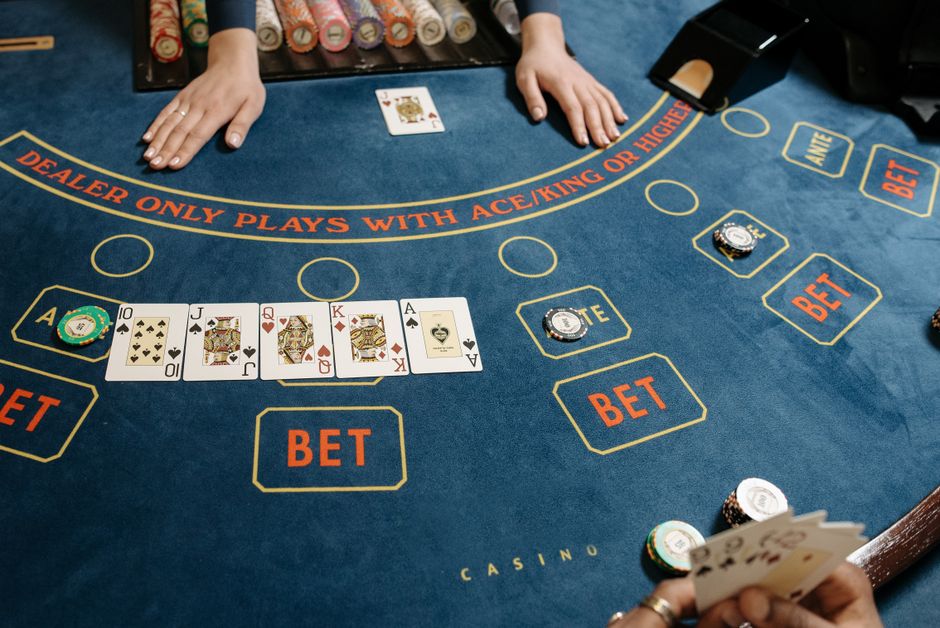
You sit down at a blackjack table with $200. The dealer shuffles, you place your bet, and for a moment, you feel like you're in control. But behind the felt and the flashing lights, a cold mathematical truth is already at work: the house edge. Most players never think about it. They chase hunches, hot streaks, and gut feelings. But if you want to survive in the iGaming world—whether you're spinning slots, grinding poker tournaments, or betting on football—you need to understand the numbers. Not because they're fun, but because they're the only thing that separates a lucky tourist from a long-term player.
House Edge: The Invisible Tax on Every Bet
Every casino game has a built-in advantage for the house. It's not a scam; it's the business model. The question is how big that edge is. Take American roulette: 38 numbers, but the payout for a single number is 35 to 1. That two-number gap (37 and 38) is the house edge—5.26%. European roulette removes the double zero, dropping the edge to 2.7%. That doesn't sound like much until you play for a few hours. With $500 in play and 60 spins per hour, the difference between American and European roulette is roughly $75 per hour in expected losses. Over a weekend, that's a new laptop.
Blackjack is different because skill matters. A perfect basic strategy player can reduce the house edge to 0.5% or less, depending on the rules. But most players don't know basic strategy—they hit 16 against a 10 because it feels right, or they stand on 12 against a 3 because they're scared. Those little mistakes push the edge back to 2% or more. The casino doesn't need to cheat; it just waits for you to make errors.
Slots: The High-Stakes World of RTP and Volatility
Slots are the most popular games in any casino, online or off. They're also the most misunderstood. Players talk about 'due' machines and 'hot' cycles, but every spin is independent. What actually matters is RTP (return to player) and volatility.
RTP is the percentage of all wagered money that a slot pays back over millions of spins. A 96% RTP slot keeps 4% for the house. That sounds reasonable until you realize that a 4% edge on a game you play 500 times per hour is brutal. If you bet $1 per spin and play 500 spins, you're cycling $500. At 96% RTP, your expected loss is $20 per hour. Play for five hours and you've lost $100—even though you might have had a few big wins along the way. For a closer look, FAFA828 covers this in more detail.
Volatility is the other half. Low-volatility slots pay small amounts frequently. High-volatility slots pay rarely but can hit massive jackpots. If you have a $100 bankroll, a high-volatility slot might eat it in 20 minutes. A low-volatility slot gives you more playtime but smaller thrills. Neither is 'better'—it depends on your goal. Want to stretch your session? Go low. Want a shot at a life-changing payout? Go high, but accept the risk.
- Check the RTP: Anything below 95% is stingy. Look for 96% or higher.
- Understand volatility: High risk, high reward; low risk, low reward. Match it to your bankroll.
- Ignore 'hot' and 'cold': Random number generators don't care about your last spin.
Poker: The Only Game Where You Beat Other Players
Poker is fundamentally different. You're not playing against the house; you're playing against other people. The casino takes a rake—typically 5% of each pot, capped at $3 to $5—but that's a fixed cost, not an edge on every hand. Your profit comes from exploiting opponents' mistakes.
That's why poker is the only casino game where a skilled player can have a positive expectation. But it's also the hardest. You need to understand position, pot odds, ranges, and game theory. A beginner who watches a few YouTube videos will still lose to a grinder who has logged 10,000 hours. The good news? Online poker tracks are abundant. You can study hand histories, use solvers, and review your sessions. Most casual players never do this, which is why they keep losing. If you're serious, treat poker like a part-time job, not a slot machine.
Sports Betting: The Illusion of Expertise
Sports betting feels different because you're not relying on random numbers—you're relying on knowledge. You know football, you follow the Premier League, you understand injuries and tactics. So why do most bettors lose? Because the bookmaker's odds already account for all that. The house edge on a standard point spread or moneyline is around 4.5% to 5%. That's baked into the odds. When you see -110 on both sides, you need to win 52.4% of your bets just to break even. Most casual bettors win 45% to 50%.
The few who profit do so by finding value—spots where the odds are mispriced. That requires deep statistical analysis, line shopping, and bankroll discipline. If you're betting on your favorite team because you 'feel' they'll win, you're not investing; you're gambling. And the bookmaker loves you for it.
Bankroll Management: The Skill Nobody Teaches
You can have the best strategy in the world, but if you bet $50 on a $200 bankroll, you'll go broke. Bankroll management is the difference between a hobby and a disaster. Here are the basics:
- Set a dedicated bankroll. Never use rent money, grocery money, or savings. If you can't afford to lose it, don't bet it.
- Use unit sizing. A 'unit' is typically 1% to 2% of your bankroll. If you have $1,000, a unit is $10 to $20. This protects you from downswings.
- Track everything. Wins, losses, hours played, emotional state. Data doesn't lie. If you're losing over 500 bets, you're not unlucky—you're bad.
- Take breaks. Tilt is real. After a bad beat, step away. The next hand will still be there in an hour.
Online casinos make this harder because everything is instant. You can deposit with a click and lose your rent in 15 minutes. That's why self-control is your most valuable asset. Set deposit limits, use time-outs, and never chase losses. The house doesn't need to rush you—it has forever.
The Long Game: Why Most Players Fail
Here's the uncomfortable truth: the vast majority of casino and betting customers lose money over time. That's not pessimism; it's math. The house edge ensures it. But that doesn't mean you can't enjoy yourself. The key is to treat gambling as entertainment, not as an income source. Set a budget, stick to it, and walk away when it's gone. The moment you start thinking you can beat the system, you've already lost.
Poker and sports betting offer a sliver of hope because skill matters. But even there, only a small percentage of players profit consistently. If you're going to play, play smart. Learn the odds, manage your bankroll, and never bet more than you can afford to lose. The lights are bright, the drinks are free, and the games are fun. Just don't forget who's paying for the carpet.


Comments